



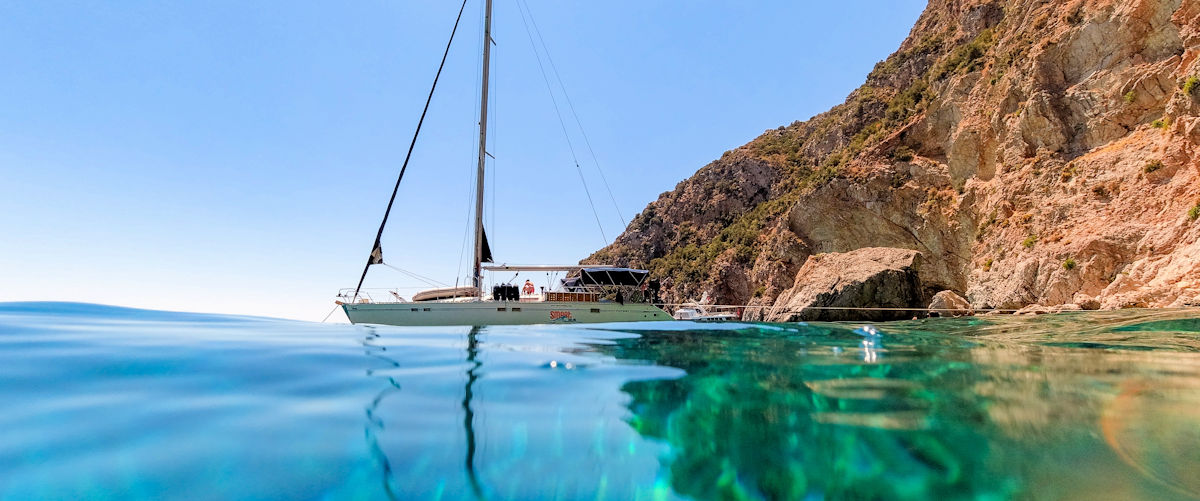
The best Marmaris sailing schools for a licence are the ones that match your intended use of the certificate, teach on the type of yacht you plan to sail, and explain the next step before you pay. For most first-time yacht sailors, that means starting with a crew or entry-level course, then moving to a bareboat skipper qualification when you are ready to command a yacht. A school name alone isn't enough.
The official IYT Worldwide course system uses a modular path from recreational training to professional qualifications. The RYA training scheme also runs from beginner courses to certificates of competence, including Day Skipper and Yachtmaster routes. In Marmaris, compare the pathway, not just the badge on the brochure.
Choose the Licence Before You Choose the School
Your intended use should decide the course. A person who wants to crew on a friend's yacht needs different training from someone who wants to charter a 40-foot boat or work toward a professional yachting career.
| Your goal | Course direction to discuss | What to check before booking |
|---|---|---|
| Learn the basics and become useful crew | Entry-level crew training | Time on deck, sail handling, safety, and whether you live aboard |
| Join a flotilla as a watchkeeper or skipper | Flotilla or similar skipper course | Night sailing policy, navigation practice, and the boat size used |
| Charter and command a yacht in familiar conditions | Bareboat skipper pathway | Practical assessment, command responsibility, and charter acceptance |
| Build toward more demanding passages | Coastal, offshore, or Yachtmaster progression | Logged experience, navigation standard, and the next exam or assessment |
| Work on yachts | Professional route and required endorsements | Commercial recognition, medical requirements, and flag-state rules |
The labels vary between organisations, so ask the school to state exactly what the certificate permits. An internationally recognised certificate still doesn't override a charter company's own experience rules, an insurer's conditions, or the laws of the country where you sail.
If you are still comparing the basic certificates, the existing IYT certified sailing courses guide explains the main IYT levels. This guide takes a different approach: it helps you decide which school and course fit your actual plan.
What Separates Good Marmaris Sailing Schools From Ordinary Ones?
A good school makes its standards visible before you arrive. Look for five practical signals: a verifiable accreditation, qualified instructors, a suitable training yacht, a clear assessment process, and a route after the first certificate.
1. Verify the Accrediting Organisation
Check the school against the accreditor's own directory where one exists. IYT's school directory lets students begin with an authorised school search, while the RYA training-centre finder is the right place to verify an RYA centre.
Don't rely on a logo copied into a social profile. Ask which organisation issues the certificate, whether the course is recreational or professional, and who conducts the assessment.
2. Match the Boat to the Skill You Want
Your training yacht affects what you practise. A small, responsive yacht can teach sail trim and boat handling clearly, while a larger cruising yacht gives you experience with heavier lines, anchoring routines, electronics, and crew roles.
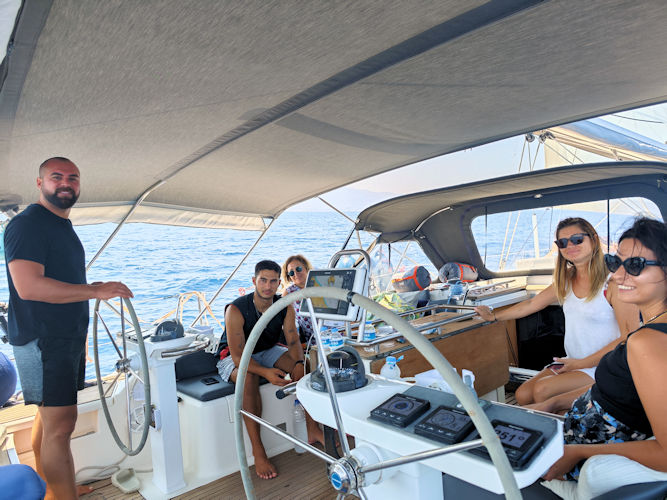
Ask for the yacht model or at least its length, layout, and normal student-to-instructor ratio. Smart Sailing Academy states that its boats have a maximum of six people, and its site describes training around the South Aegean bays and Greek Islands. Those details matter because they tell you more about the practical setting than a generic phrase such as "hands-on course."

3. Ask How Much of the Week Is Real Sailing
A course should tell you how time is split between briefing, navigation, manoeuvres, watches, meals, and shore time. The answer matters more than the number of days in the headline.
Ask these questions:
- How many students share the yacht?
- Will each student helm, tack, gybe, reef, anchor, and berth?
- Is navigation taught on paper, electronics, or both?
- Do students plan the route and make decisions under supervision?
- What happens if the weather prevents the planned passage?
The best answer is specific. "You will take turns" is weaker than a written outline showing the manoeuvres, navigation tasks, and assessment criteria each student must complete.
Marmaris, Datça, or the Wider South Aegean?
The right training base depends on the water you want to sail after the course. Marmaris gives schools access to sheltered bays, open-water legs, busy marinas, and routes toward the wider South Aegean. That mix can create a useful progression inside one course, but only if the instructor uses it deliberately.
Ask where the school normally sails, not just where its office is. A school based in Marmaris may train from a marina outside the town, and a course advertised as a Marmaris course may include routes toward Datça, Göcek, or Greek islands. Check the embarkation point, transfer time, and border or paperwork requirements before booking.
Weather is part of the qualification, not a nuisance around it. A responsible instructor will adjust the plan when conditions change and will explain what skills can be assessed safely on an alternative route.
For a broader school comparison, read Best Sailing Schools in Marmaris for 2026 alongside this decision guide. Use that comparison to ask better questions of each school rather than treating the destination as the qualification itself.
A Practical Shortlist Method for Sailing Students
Use the same questions with every school. You can then compare answers without being pulled toward the cheapest headline or the most polished photographs.
- State your goal. Say whether you want to crew, charter, skipper a flotilla, or progress toward professional work.
- Request the exact course outline. Ask for prerequisites, duration, yacht details, instructor ratio, assessment, and what is included.
- Verify the certificate route. Confirm the issuing body and check the school in the relevant official directory.
- Test the progression plan. Ask what experience or course comes next after you pass.
- Check the practical terms. Confirm meeting point, accommodation, meals, safety equipment, cancellation rules, and weather policy.
- Compare value, not only price. A small class, more helm time, and a clear assessment may matter more than a nominally lower fee.
Smart Sailing Academy describes itself as an IYT sailing school in Marmaris, says its instructors are IYT certified, and publishes a course path that includes International Crew, Flotilla Skipper, Bareboat Skipper, VHF-SRC, ICC, and Yachtmaster options. Students should still ask the school to confirm the current course dates, prerequisites, and certificate terms for their chosen intake.
How to Compare IYT, RYA, and ISSA Without Getting Lost
IYT, RYA, and ISSA are different training and certification routes, so "which is best" has no universal answer. The better question is which certificate your intended charter company, insurer, employer, or flag-state authority will accept for the boat and waters involved.
| Check | IYT | RYA | ISSA |
|---|---|---|---|
| First verification step | Find the school in the IYT directory | Find the centre in the RYA network | Ask the school for the issuing-body and centre details |
| Typical student question | Which IYT level matches my intended command role? | Is this a sail-cruising or certificate-of-competence route? | Which local and international uses accept this certificate? |
| Main decision point | Modular progression and certificate scope | Course level, experience, and route to higher qualifications | Acceptance for the specific use and location |
| What to verify in writing | Certificate name, vessel limits, assessment, and acceptance | Certificate name, prerequisites, practical requirements, and acceptance | Certificate name, requirements, and acceptance |
The official IYT recreational-course information and RYA sail-cruising course information are better sources for scope than a school's short advertisement. For ISSA, ask for the exact certificate and then confirm acceptance with the organisation that will rely on it.
What to Ask Before Paying a Deposit
Ask for written answers to these questions:
- Is the school currently authorised to deliver this exact course?
- Who is the instructor, and what qualification do they hold for it?
- What are the prerequisites, including experience and medical or radio requirements?
- What yacht will students use, and how many students will share it?
- Is the exam or practical assessment included?
- Which documents, licence fees, food, accommodation, fuel, and marina costs are included?
- What certificate will I receive if I complete the course successfully?
- Can you explain where previous students use this certificate, without promising acceptance everywhere?
Price should come last in the conversation. The existing Marmaris sailing licence cost comparison is useful for understanding the cost questions to ask, but a low quote can stop being low after exam fees, accommodation, transfers, or extra practical days are added.
FAQ
What are the best Marmaris sailing schools for a licence?
The best school is the one that is authorised for the certificate you need, offers enough practical helm and navigation time, and can explain the certificate's real-world acceptance. Compare verified accreditation, boat, class size, assessment, and progression instead of relying on a ranking alone.
How do I choose between IYT and RYA training in Marmaris?
Choose by acceptance and intended use first, then compare the course structure and experience requirements. Verify the school and course through IYT Worldwide or the RYA network, and ask the charter company or insurer what it accepts.
Is Marmaris a good place to learn to sail?
Marmaris can be a strong training base because courses can combine marina work, sheltered bays, and longer South Aegean passages. The school still matters: ask where the course sails and how much time each student gets on the helm and navigation tasks.
What should a beginner learn before a bareboat skipper course?
A beginner should first build basic sail handling, steering, collision-awareness, safety, and navigation skills. A crew or entry-level course can provide that foundation, while a bareboat skipper course adds command decisions, route planning, anchoring, manoeuvring, and responsibility for the vessel.
Do sailing schools in Marmaris include accommodation?
Some live-aboard courses include accommodation on the training yacht, but terms differ. Ask whether bedding, meals, fuel, marina fees, transfers, exam charges, and certificate fees are included before you compare quotes.
Does an international sailing certificate let me charter anywhere?
No certificate guarantees acceptance everywhere. Charter companies, insurers, local authorities, and flag states can apply their own rules, so confirm the exact certificate, boat size, sailing area, and experience requirements before booking a yacht.
How can I check whether a Marmaris school is genuine?
Start with the issuing organisation's official school or training-centre directory, then ask the school to identify the instructor, course syllabus, assessment, and certificate issuer. A clear answer with matching records is a better trust signal than a badge or an undated testimonial.
Sources & References
- IYT Worldwide - IYT course system and school verification
- IYT recreational courses - recreational certificate context
- RYA courses and qualifications - RYA training pathway
- RYA training-centre finder - centre verification
- Smart Sailing Academy IYT courses - local course and school details